Drone Funding Is Surging. Here’s What Commercial Pilots Should Watch.

Category: Drone Industry / Defense Tech / Commercial Operations
Drone money is moving fast.
German drone and defense technology company Quantum Systems just raised $1.2 billion, lifting its valuation to about $8 billion. The round included major backers such as Airbus, and the company says the funding will support production expansion and autonomous systems development across allied markets. Reuters
At the same time, AeroVironment reported record fiscal fourth-quarter revenue of $641.6 million, with funded backlog rising to $1.2 billion. The company pointed to demand across autonomous systems, drones, counter-UAS, space, and advanced technologies. AeroVironment
For everyday drone pilots, this may sound like defense-sector news. But it is also a signal: drones are moving from tools to infrastructure.
Flight-Ready Breakdown
What Changed
The drone industry is no longer being funded like a niche hardware category.
Investors, governments, and prime contractors are putting serious capital into autonomous systems, mission software, scalable production, and counter-drone capabilities.
Quantum Systems described its latest raise as a move to scale “software-defined autonomous systems” across air, land, and sea. Quantum Systems
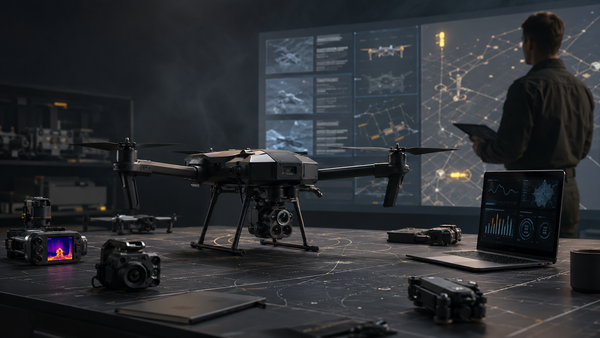
That language matters. The future is not just about better airframes. It is about connected systems: aircraft, sensors, software, mission planning, data processing, and secure operations working together.
Who It Affects
This affects more than defense contractors.
It affects:
- Part 107 pilots building commercial services.
- Inspection and mapping operators.
- Public safety drone teams.
- Utility and infrastructure programs.
- Drone service providers trying to win larger clients.
- Pilots deciding what skills to build next.
- Small drone businesses watching where the market is heading.
The funding may be going to major companies, but the market signal reaches the field. Clients will increasingly expect more than “I can fly a drone.” They will want repeatable workflows, documented safety, usable data, and mission-ready reporting.
Why It Matters
The drone industry is maturing in two directions at once.
One direction is restriction and enforcement: tighter airspace rules, more no-drone zones, Remote ID expectations, and faster enforcement around sensitive locations.
The other direction is professionalization: more capital, larger contracts, better platforms, and more demand for operators who can deliver useful data safely.
That creates a split.
Casual operators may feel the market getting harder. Professional operators may find new opportunities if they can speak the language of risk, compliance, data quality, and mission outcomes.
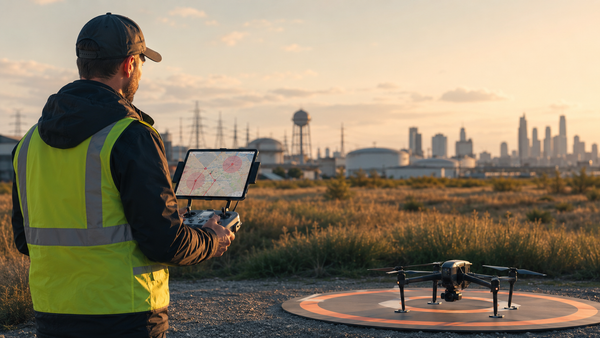
For commercial pilots, the takeaway is simple: the drone itself is becoming the least interesting part of the pitch.
Clients care about what the mission produces:
- A thermal finding.
- A roof condition report.
- A construction progress record.
- A utility inspection package.
- A public safety overwatch feed.
- A map that helps someone make a decision.
The money flowing into autonomy and defense tech is a reminder that drones are becoming part of larger operational systems.
Takeaway
The pilots who win the next phase will not just be good stick-and-camera operators.
They will be mission operators.
That means understanding airspace, safety, data, documentation, sensors, software, and client outcomes. It also means watching the defense and public-sector side of the industry, even if you work in real estate, construction, inspections, or media.
Why? Because defense adoption often pushes standards, hardware expectations, training models, and public-sector procurement habits into the broader market.
Today’s defense funding becomes tomorrow’s commercial expectation.
Before You Fly
If you are building a serious drone business, start tightening these areas now:
- Build repeatable mission checklists.
- Document airspace reviews and client approvals.
- Learn mapping, thermal, inspection, or public safety workflows.
- Improve deliverables, not just flight footage.
- Track drone policy and funding trends.
- Watch counter-UAS and critical infrastructure rules.
- Prepare for clients to ask about compliance, insurance, and data security.
- Position yourself as an operator, not just a pilot.
DPB Bottom Line
The drone industry is attracting billion-dollar funding because unmanned systems are becoming operational infrastructure.
For UAS and drone pilots who want to fly smarter, the opportunity is not to chase hype. It is to become more useful, more disciplined, and more mission-ready.
The market is telling us where things are going: smarter aircraft, smarter software, smarter missions.
Smart pilots should be paying attention.